
Clive Barker
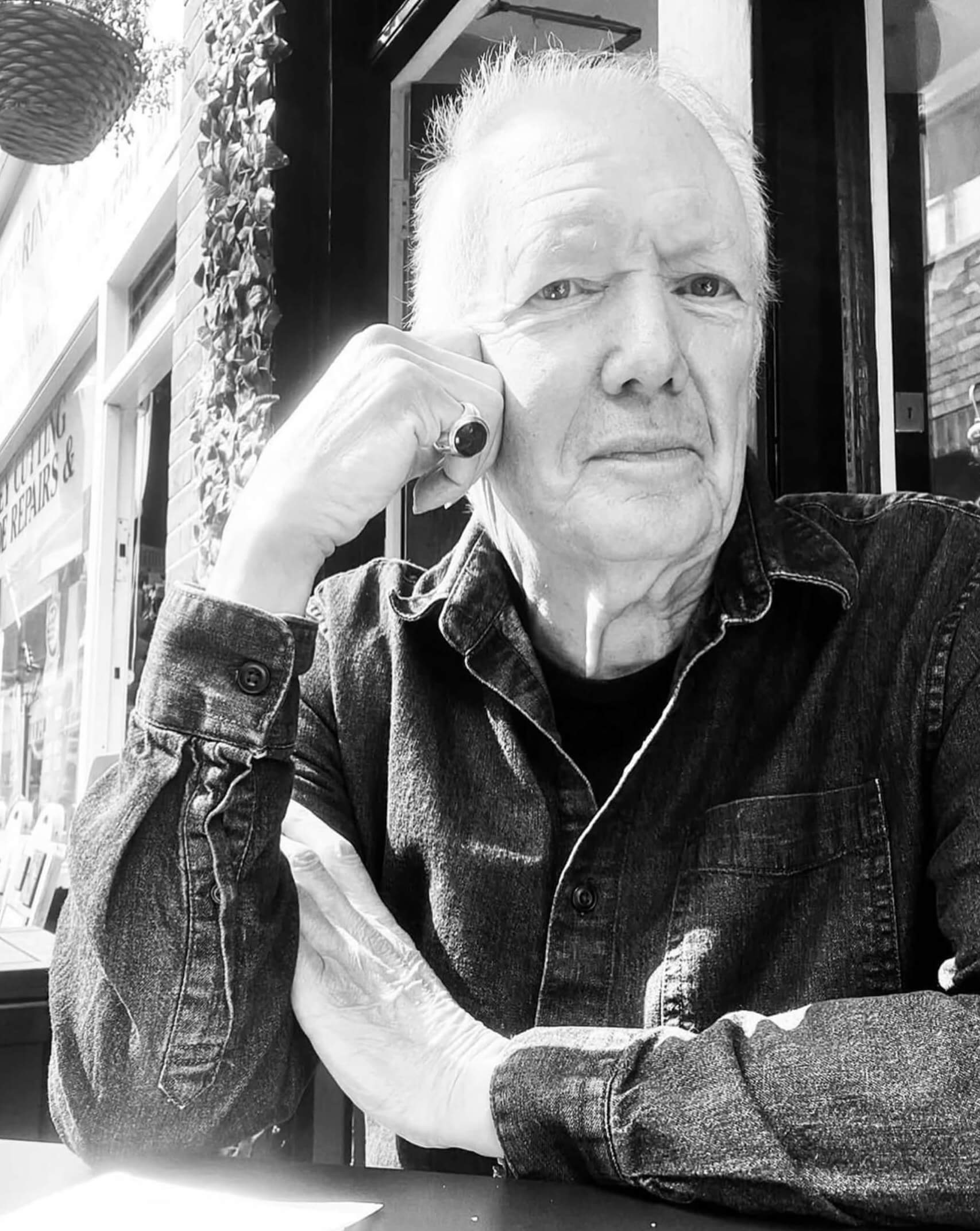
Clive Barker is one of Britain’s foremost Pop artists, celebrated for a career that has spanned more than six decades and established him as a pioneering figure in the development of Pop sculpture. Emerging in the early 1960s at the heart of London’s groundbreaking Pop art movement, Barker transformed the visual language of everyday objects into works of enduring sculptural power.
Born in Luton, Bedfordshire, in 1940, Barker studied at Luton College of Technology and Art before developing a distinctive artistic vision influenced by industrial materials, polished metal, and the aesthetics of mass production. Unlike many of his contemporaries, Barker chose sculpture as his primary medium, creating iconic works that reinterpret functional objects through gleaming bronze and chrome finishes. His practice draws upon intuition, memory, and association, often blurring the boundaries between reality and illusion while echoing the legacy of Marcel Duchamp’s ready-made.
As a protégé of the legendary dealer Robert Fraser, Barker was closely connected to the original circle of British Pop artists, including Peter Blake, Richard Hamilton, and David Hockney. His sculptures investigate themes of consumer culture, identity, nostalgia, and the transformation of the ordinary into the extraordinary. Characterised by immaculate surfaces, wit, and conceptual precision, his works have had a significant influence on subsequent generations of artists, notably the polished sculptural language that emerged in the 1980s.
Barker has exhibited extensively in major galleries and museums throughout the United Kingdom and internationally, with important solo exhibitions at the National Portrait Gallery, the Imperial War Museum, Wolverhampton Art Gallery, and Whitford Fine Art. His work has also featured in landmark surveys of British and international Pop Art, and is held in prestigious public collections including Tate, the British Museum, the Victoria and Albert Museum, the National Portrait Gallery, the Philadelphia Museum of Art, and the Hirshhorn Museum and Sculpture Garden.
Remaining steadfastly committed to the ideals of Pop Art, Clive Barker continues to create sculptures that elevate the imagery of popular culture into timeless works of art. His practice stands as a vital bridge between the radical energy of the 1960s and the enduring appeal of contemporary sculpture, securing his place as one of the most important sculptors of the British Pop movement.
 Clive Barker
 Clive Barker





 Ben Allen
 John Mitchell